
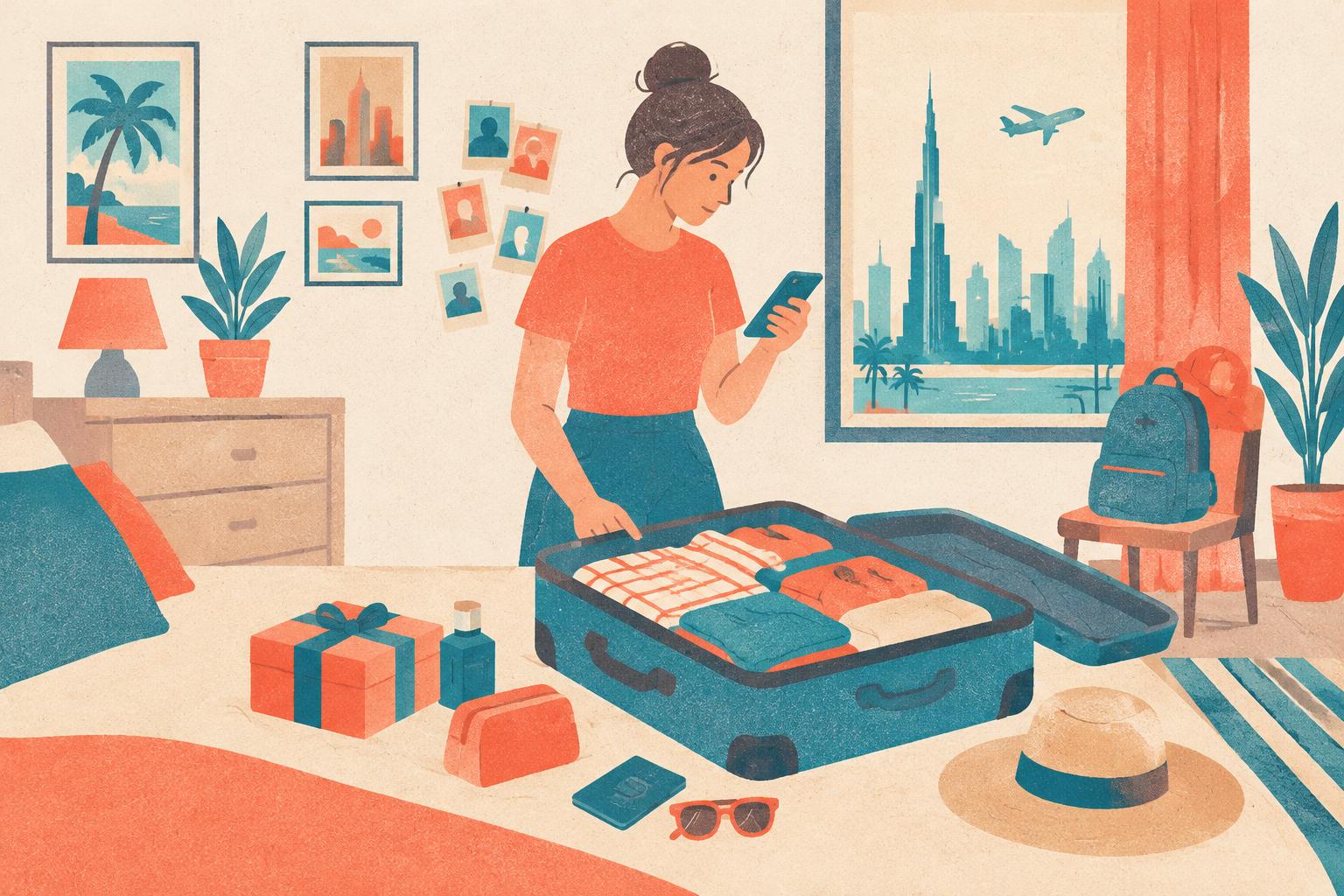
In the UAE the legal position on alcohol varies by emirate and by licensing, and alcohol is not a neutral gift in most offices here regardless of the law. That single fact kills a large part of the 21st birthday gift ideas you will find online, because the genre is mostly barware and drinking-milestone objects written for an American reader for whom turning 21 means exactly one thing. Once you remove the shot glasses and the engraved hip flask, you are left with the harder question: what are you actually trying to say to this person, and what will say it.
That question matters more at 21 than at most birthdays. The person is usually in a transition — finishing a degree, starting a first job, moving out of the family home into a shared flat, or about to leave the country entirely. What you give lands inside that transition. A gift that says "I noticed what is happening to you" reads completely differently from one that says "I remembered the date."
Treating 21 as a drinking milestone when you have not checked
It is tempting because the entire genre is built that way. Search for 21st birthday gifts and you get barware, cocktail kits, decanters, personalised whisky glasses. The imagery is everywhere and it looks celebratory rather than lazy.
What goes wrong is not only the obvious religious case. It is the colleague who stopped drinking two years ago and has not told the office, the one on medication, the one whose parents still open their post. Even where the gift is welcome, a cocktail set assumes a kitchen with somewhere to put it and a cupboard with the ingredients in it. Someone sharing a two-bedroom with three other people has neither. And a set bought on the strength of the phrase "complete kit" usually arrives with decorative duplicates, no usable strainer, and a jigger marked in ounces rather than 15 ml and 30 ml, which makes every recipe in every book useless to them.
If you do know the person drinks, hosts, and has the counter space, the listing has to name the components individually — shaker, jigger, strainer, bar spoon, muddler — and state stainless steel rather than "metal", and say which parts are dishwasher-safe, because plated finishes and wooden stands are not. A two-piece Boston shaker expands into a real home bar; a three-piece cobbler is easier for a beginner but seizes shut when it gets cold. If you do not know any of that, the barware category is not cautious-but-fine, it is simply the wrong aisle.
Buying the upgrade without checking the size
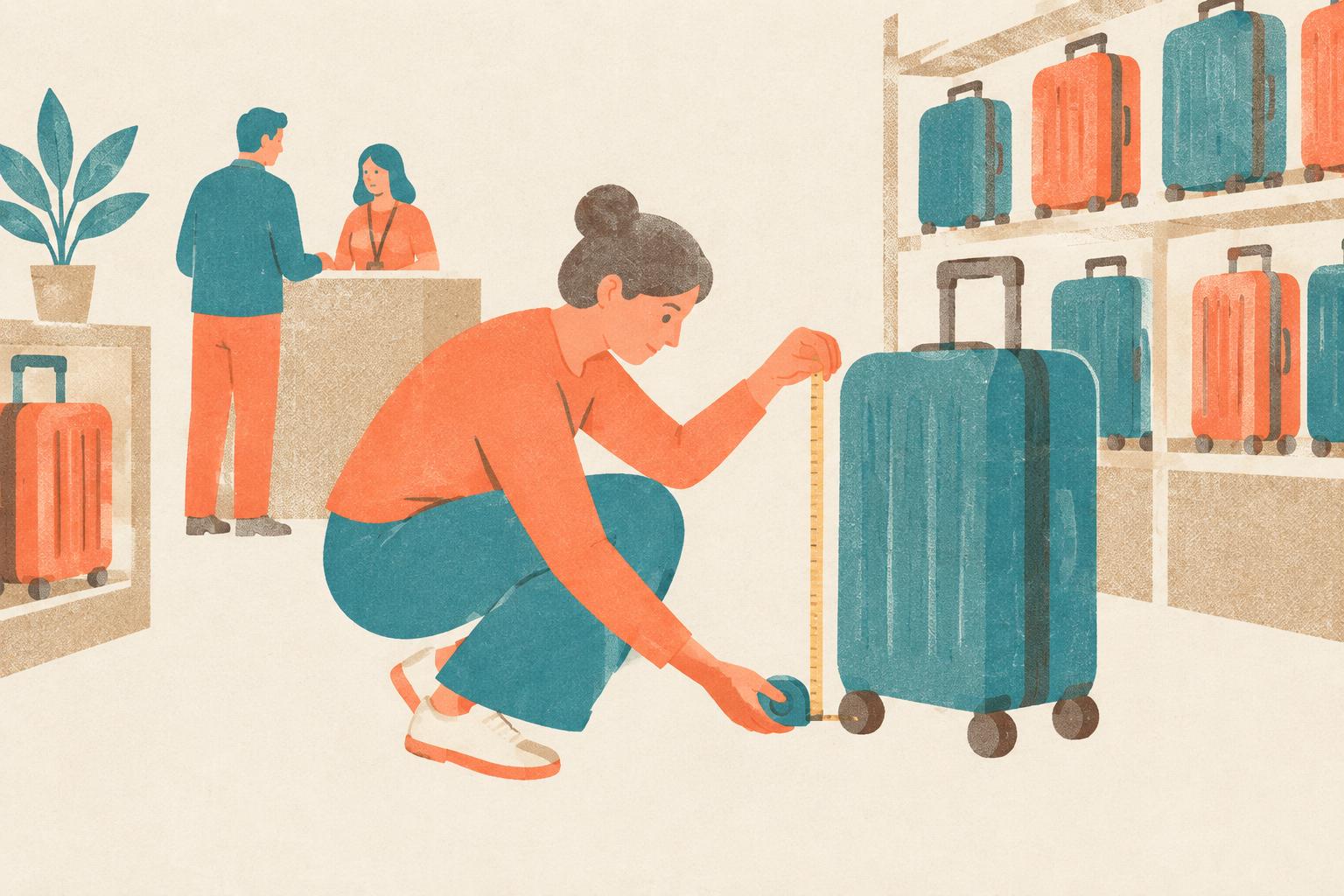
This is where good intentions fail on a number. You want to give something that supports the new phase — a cabin suitcase for someone who now flies home on their own budget, a backpack for someone starting work, a decent pan for the first flat.
The failure is almost always dimensional. "Carry-on size" is not a dimension; airlines in the region differ on cabin allowances and the number you need is the one including wheels and handles, which some listings quietly exclude. "Lightweight" without a figure in kilograms is a word. A laptop backpack that says it fits a 15-inch machine may have an internal sleeve that does not take a 15-inch machine with a thick case on it, so you want the sleeve measured in centimetres. A tool set with an enormous piece count is often mostly duplicate bits, and if the sockets are imperial it is decoration in a country where everything is metric.
So before you buy anything in this class, answer one factual question: what does the thing it replaces look like right now. If their suitcase is a hand-me-down with one dead wheel, you are safe and the gift will be used within a month. If they bought one in the last year, you are buying a second suitcase for someone who does not have room for the first. The same test applies to wallets, where the only specifications that matter are folded dimensions and card slots, and to cookware, where induction compatibility and whether a lid is included decide whether it gets used at all.
Mistaking personalised for personal
Engraving feels like the strongest possible signal of effort. It has a name on it, a date, maybe coordinates or a line from something. It is the obvious move for a close friend or a younger sibling, and it is the obvious move for someone who wants the gift to be unmistakably theirs.
What goes wrong is that personalisation transfers all the risk to you. A misspelled name on a necklace cannot be returned — personalised goods are routinely excluded from returns, and the listing will say so if you look for it. A photo book made from images pulled off a chat thread comes back soft and pixelated, because the resolution the platform served you is not the resolution a printer needs. An engraved object sized for a desk arrives at the dimensions actually stated, which is frequently smaller than it looked. And a sentimental object imposes itself on the recipient's living space in a way a neutral one does not; a 21-year-old with a minimalist shelf and a landlord's walls may not want a framed thing with their own face on it.
If you go this way, the checkable things are the character limit, whether symbols and accented letters are permitted, the finished dimensions and weight, and whether a proof or preview is offered before production. The proof is the one most people skip and the one most people wish they had. There is also a timing trap that has nothing to do with the item: anything made to order needs lead time you probably do not have, so ask the seller for a date and treat a vague answer as a no.
Dates themselves are worth a sentence. If the keepsake marks the birthday, check the date against a document rather than memory; a passport date of birth and a celebrated date are not always the same.
Giving technology without knowing what they already carry
Headphones, a speaker, an instant camera. The appeal is that these look generous, they are easy to buy quickly, and nobody has to pretend to like them.
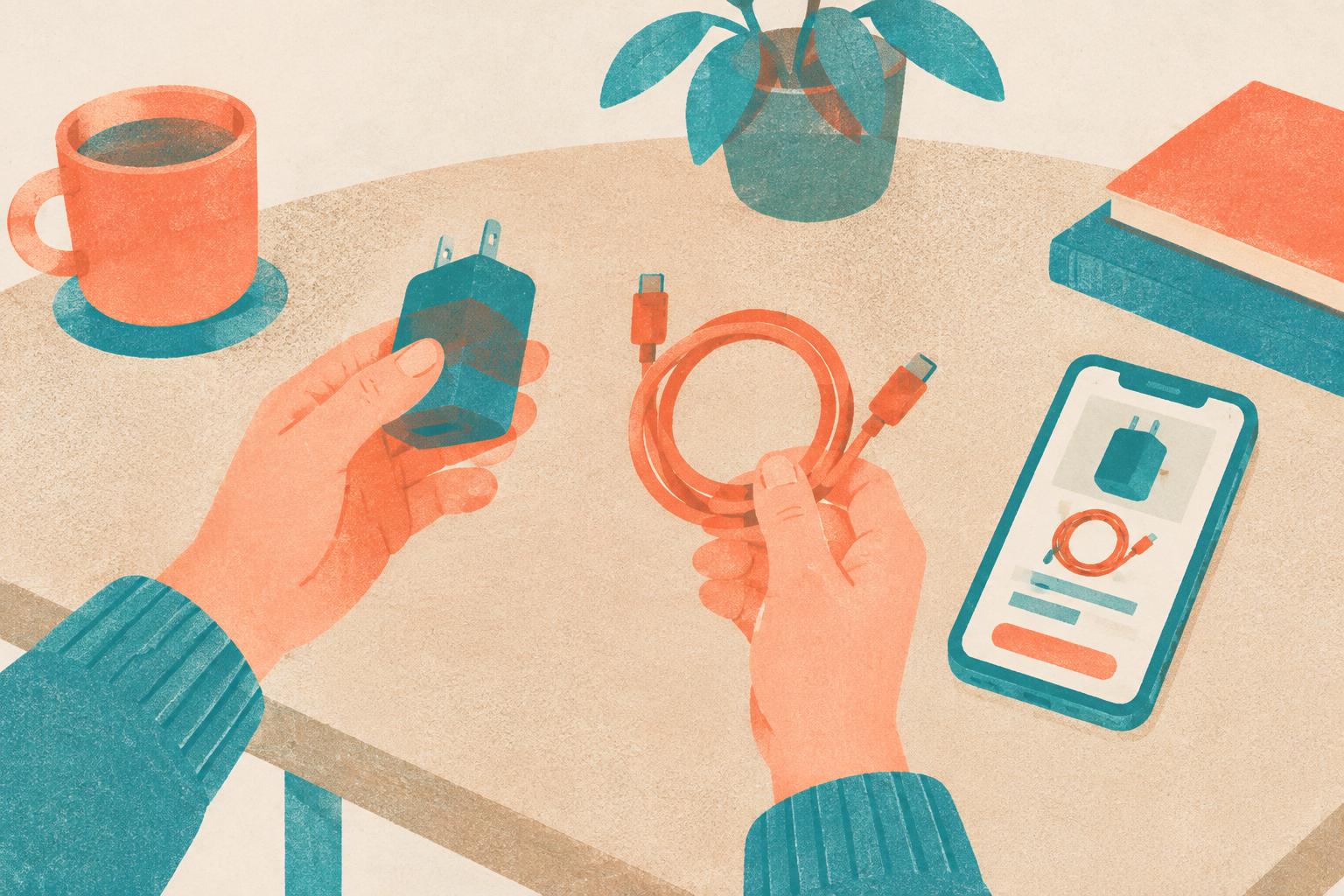
The problem is that a 21-year-old is the single most likely person in your life to already own a better version. They have earbuds. They have a speaker. If they are the kind of person who would want an instant camera, there is a decent chance one is already in a drawer with no film in it. And the specification that decides whether the gift works is rarely the one the listing shouts about. Peak watts do not tell you how a speaker sounds in a room, so look for an IP rating, a measured weight and whether it can play while charging. "Up to" battery life tells you less than a playback figure stated under defined conditions. What matters most is whether the charging connector matches everything else they own, whether a mandatory app exists and is available on their phone's operating system, and whether the required consumable is buyable here. An instant camera is a film subscription you have given someone without telling them, so check that the film format is stocked locally before you commit, and check whether any film is in the box at all.
If you know their ecosystem — same phone brand, same charging cable, same earbud case they lose constantly — technology becomes a strong choice precisely because you can buy the upgrade rather than the duplicate. Multipoint pairing, codec support, a replaceable charging case, an IP rating if they take a speaker to the beach: these are attributes you can confirm in a listing in under a minute. If you do not know their ecosystem and you cannot find out without ruining the surprise, pick a class where ignorance costs less.
Choosing an experience for the memory and ignoring the logistics
Experiences are the honest answer for someone who already owns everything and has nowhere to put more of it. A desert drive, a climbing session, a cooking class, tickets to something at Coca-Cola Arena. The reasoning is sound: at 21 people have more free time and fewer possessions than they ever will again.
What goes wrong is scheduling and eligibility. A fixed-date ticket for someone whose exam timetable is not yet published is a gift that expires unused. An adventure activity has a minimum age, often an identification requirement, sometimes a weight or height limit, and a waiver somebody has to sign. A voucher bought from an international platform may be redeemable only in another country, so check the redemption terms on the voucher page before you buy rather than after.
The attributes worth confirming are unglamorous and take two minutes: whether the recipient chooses the date or you do, whether the booking is transferable, what the expiry is, and what is included line by line — equipment, instructor, transport, food, photos. A class that supplies ingredients is a different gift from one that does not. If the person has a complicated schedule, an open-dated booking beats a dated one even if the dated one is more impressive on paper.
There is a version of this that solves the register problem too. If you are a colleague who gets on with them but is not a friend, a shared activity you both attend reads as too much. The same activity bought for them and a friend reads correctly.

Letting three people give the same thing
At 21 the guest list is large and badly coordinated, and everyone arrives at the same obvious conclusion because they are all searching the same terms. The fix is not to buy something obscure to avoid collision, which is how people end up giving things nobody wants. It is to find out what the others are doing before you commit. Where the family is already coordinating, a shared list that guests reserve items from on a single page, without making accounts, is what stops two people buying the same earbuds — WishDune does this.
If no coordination exists and you cannot start one, ask the person closest to the birthday what the three biggest gifts are. Then buy something adjacent rather than competing: if someone is giving the suitcase, you give the packing cubes and the luggage scale.
Deciding what you are saying
Work backwards from the message, because the message is the only thing that distinguishes two gifts at the same price.
If the message is respect — a colleague's younger brother, a neighbour's daughter, somebody you know socially but not well — you want something good, neutral, and unmistakably not personal. Quality food is the standard answer here, provided you check that it contains no alcohol and no pork-derived ingredients, which rules out a surprising amount of imported confectionery and charcuterie. A box of dates needs no interpretation in any household in this country. Books are the other neutral: a well-chosen one on something they are studying or starting says you paid attention without claiming intimacy, though it fails if you misjudge the level and hand a second-year student an introduction they finished at school. Check edition and publication date, and avoid workbooks that require materials you have not supplied.
If the message is support — they are starting something and you want to back it — the gift should reduce friction in that specific thing. A course or a subscription does this honestly, but only for someone who will have the hours; a 21-year-old working full time and studying part time does not need another thing with a completion percentage attached. Check the access period, whether the platform is available in the UAE, and crucially whether it auto-renews onto a card the recipient has to add themselves. A gift that quietly becomes a bill is not support. If the thing they are starting is physical, the practical upgrade is the right class, and the size question from earlier decides it.
If the message is affection, personalisation earns its risk, and the proof matters more than the material.
One last constraint that sits above all of this: anything shipping from outside the country is a different kind of purchase from anything already in the UAE. It is the difference between something sitting in a local warehouse and something that has to clear customs, which is not a step you can influence once it starts. If the birthday is close, restrict yourself to what is physically in the country and spend the saved time on the choice rather than the shipping.
FAQ
Buy for the parent's judgement, not the child's taste. Good food, a well-made everyday object, or a book connected to what they are studying all land correctly without presuming closeness. Anything personalised or anything about their appearance is too familiar for this relationship.
Ask a sibling, a flatmate, or whoever is organising the party — they have usually already been asked by three other people. If you must ask the recipient, ask about a category rather than an item: whether they are happy with their current bag, whether they still use the camera. Vague answers are still useful.
From family, usually yes and often expected. From a colleague or a friend's parent it can read as though you did not want to think about it. If you go the voucher route, confirm it is redeemable in the UAE rather than in the country the platform is headquartered in, because many are not.
Only what is already stocked in the country. Anything customised, anything shipping internationally, and anything with a production step is out. That still leaves technology, practical upgrades, food, books, and an open-dated experience booking you can print or forward.
Between family members it is normal in several communities here and carries no awkwardness. From anyone else it shifts the register of the relationship, and the recipient has to decide what you meant by it. If you are not family, pick something that does not have to be worn.
Anything bulky becomes a problem they have to solve at the airport, and powered items may not match the plug or voltage where they are going. Favour something small, something consumable, or something digital, and read the input voltage range off the charger label before you buy.